A Latin plate is a promise of abundance. Rice, beans, maduros, the protein, the salad, the sauce, the arepa on the side. At the table it is exactly what the customer came for. In a photo, all those parts compete for attention, and without production the plate reads as a crowded tray instead of a feast.
Why Latin plates are hard to photograph
- Many components, one plate. A bandeja paisa or a Cuban combination plate has five or six elements. Each one needs its place, or nothing stands out.
- Browns and beiges. Rice, beans, fried pork, plantains, yuca. Most of the plate is warm and dark. Without the green of the avocado or the red of the pico, it looks heavy.
- Frying fades. Chicharrón, tostones and empanadas look crisp for a few minutes. Then the steam softens them and the camera sees it.
- Sauces spread. Mojo, hogao, ají, the sauce of the ropa vieja: they move on the plate and stain the rim.
What the production changes
The first decision is the plate. Latin food looks best on plates with a little color or texture, large enough that the components do not overlap: a matte stoneware oval, a painted ceramic, a wood board for the picada. Then the order: protein toward the camera, the starch behind it, the fresh color on the side where the light hits. Fried items are the last thing on the plate, straight from the fryer. Sauces go in small bowls or are added with a spoon at the end, and the rim gets wiped before the shot.
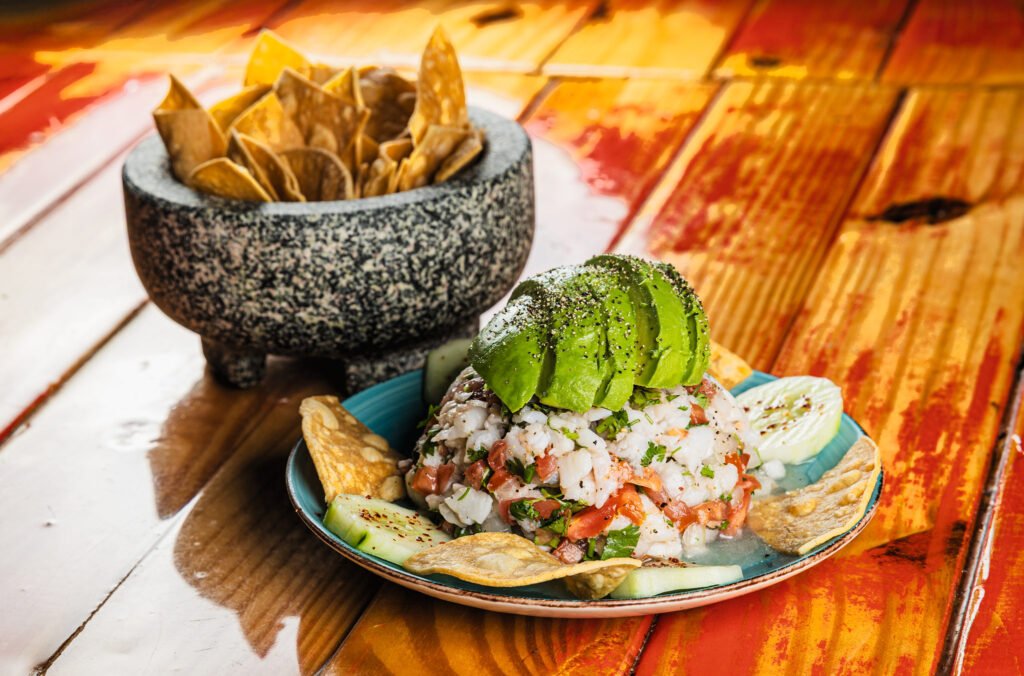
For ceviche, leche de tigre and aguachile, the enemy is time: the lime cooks the fish and the color changes. They are photographed in a cold bowl, fresh, with the avocado and the onion placed by hand.
Where it goes wrong without production
If the restaurant has not uploaded its own images, a delivery platform can put a photo of a regular order on the listing: the plate in an aluminum tray, the rice pressed against the beans. If the platform sends a photographer, he has about two hours, the restaurant’s plates and twenty or thirty dishes to cover, so every plate gets minutes. And the cook plates for service, with abundance and speed, which is exactly right for the dining room and wrong for the lens.
A shot list for a Latin restaurant
- The signature plate of the house, alone, in its best version.
- The combination plates that sell most on delivery, plated, not in the container.
- Appetizers in a group: empanadas, tostones, croquetas, arepas.
- Soups: sancocho, ajiaco, caldo, photographed hot with steam.
- Drinks: batidos, jugos, mojitos, café, with condensation or crema.
- One overhead table with the full spread, for Google Business Profile, the website and Instagram.
For restaurants from Wellington to Miami
Palm Beach County has Colombian bakeries in Wellington and Royal Palm Beach, Cuban cafeterias in West Palm Beach, Peruvian kitchens in Lake Worth Beach and Boca Raton, and Miami has all of them at scale. The customers know the food. They can tell from a photo if the plate is the real thing, and they choose on that.
Latin food photography with the production included
I am Colombian, I photograph Latin food with my own plates, surfaces and time for every dish, and I direct the plating for camera with your kitchen. Sessions happen in your restaurant before service, in Palm Beach County, Broward or Miami. Photos come cropped for DoorDash, Uber Eats, Google and Instagram, and there are monthly plans for social media and Google.
See the packages: restaurant and food photographer in Palm Beach and Miami. Also in the series: taco photography for delivery apps.
Also in the series: cocktail and bar photography.
More food photography guides
- Pizza Photography for Delivery Apps: The Cheese Pull Is Not the Point
- Food Truck Photography: How a Truck With No Dining Room Wins on Google and Uber Eats
- Cocktail and Bar Food Photography: Selling the Drink Before the First Sip
- DoorDash and Uber Eats Menu Photos: What Happens When You Don’t Upload Your Own
- Taco Photography for Delivery Apps: Why Tacos Look Flat in a To-Go Box
- How to Photograph Fried Food So It Still Looks Crispy